
Updated on july 20, 2026
This document defines the specific safety rules and procedures for accessing and using the equipment available in the LITHO laboratory. For all general matters concerning workplace Prevention and Safety, reference is made to the training provided by the Servizio Prevenzione e Protezione (SPP) of Istituto Nanoscienze del CNR or the Università degli Studi di Modena e Reggio Emilia.
The digital version of this document is available online.
Index
- Key Personnel
- Access Rules
- Laboratory Description, Core Mission and Equipment Policy
- General Safety Rules and User Code of Conduct
- Basic Rules for Chemical Storage
- Procedures for Minor Environmental Emergencies
- Specific Safety Rules for Equipment Usage
Key Personnel
- Laboratory Manager (RDL): Alessandro di Bona
- Technical Prevention Officer (RTP): Alberto Ghirri
- Head of the Servizio Protezione e Prevenzione (SPP): Milena Toselli
Access Rules
Only two categories of people are allowed to access the laboratory: USERS and GUESTS.
The list of authorized users is maintained by the RDL and is posted on the laboratory entrance door.
Guests may only access the laboratory if accompanied by a user and are not permitted to operate the equipment independently.
Users must complete the Scheda delle Mansioni (Job Task Sheet) prepared by the SPP and must hold a certificate of attendance for the course “Formazione generale alla prevenzione e alla sicurezza sul lavoro” (General Training on Prevention and Safety at Work) provided by the Università degli Studi di Modena e Reggio Emilia or an equivalent certification. Depending on the specific activities described in the Scheda delle Mansioni, completion of additional training modules on specific risks may be required.
Users declare that they have read and understood this document.
Non-compliance with the procedures and rules described in this document entails, in addition to legal liability under the law, the adoption of disciplinary actions against violators. For advice or consultation, please contact the RDL or the SPP.
Laboratory Description, Core Mission and Equipment Policy
The LITHO laboratory is located in the Edificio Fisica, ground floor, basement level. It consists of an access room (room MO-17-00-019), reached via a fire door at the bottom of the ramp opposite the elevators, and a laboratory room (room MO-17-00-018), separated by a door. The fire door serves as both the entrance and the emergency escape route.

Core Mission and Cross-Contamination Policy
The LITHO laboratory is a highly specialized, shared facility dedicated exclusively to specific lithographic processes. It is explicitly not a general chemistry laboratory. This strict operational boundary is mandatory to prevent cross-contamination, guarantee rigorous process reproducibility, and maintain the safety standards required for micro- and nanofabrication workflows. General chemistry activities or experimental processes unrelated to approved lithographic workflows are strictly prohibited inside the facility.
Equipment Policy and Shared Space Regulations
The facility is structured as an integrated and functional ecosystem where every instrument serves a specific phase of the shared workflow; therefore, the LITHO laboratory does not function as a general equipment pool or warehouse. All instrumentation, benchtop devices (including hotplates, stirrers, and tools), and accessories are strictly considered fixed equipment and must remain at their designated stations. Relocating, borrowing, or removing any item from the laboratory for external use is strictly prohibited without explicit, prior authorization from the Laboratory Manager (RDL). The unauthorized removal of shared equipment disrupts the functionality of the workspace and directly impacts the research activities of all other users.
Systems and Infrastructure
The LITHO laboratory is equipped with the following systems:
- An extraction system for safety cabinets containing reagents and chemical waste;
- An extraction system for the chemical fume hood;
- A vapor extraction system for the equipment;
- An AHU (Air Handling Unit) for the circulation, heating, and cooling of external air, connected to the general building HVAC system;
- A compressed air distribution line;
- A nitrogen distribution line;
- An argon distribution line (currently unused and not connected to gas cylinders);
- Four distribution lines (argon, oxygen, CF4, and CHF3) for the operation of the Reactive Ion Etching (RIE) system;
- Fire sensors connected to the general fire alarm system;
- An oxygen deficiency sensor;
- An oxygen enrichment sensor;
- A solvent vapor sensor;
- A motorized window opening system;
- An eyewash station;
- An internal air fan coil unit connected to the general heating/cooling system;
- An independent air conditioner/heat pump for internal air, separate from the general heating system.
The gas distribution lines are connected to the external cylinder storage area located near the suppliers' entrance of the Edificio Fisica, door no. 3.

Access Room (Room MO-17-00-019)
This room houses the following:
- An emergency air compressor;
- A shelf containing Material Safety Data Sheets (MSDS) for the chemicals used in the laboratory, as well as equipment and instrument user manuals;
- Two cabinets containing instrument accessories;
- A glassware cabinet.
Laboratory Room (Room MO-17-00-018)
This room houses the following:
- A ventilated chemical fume hood;
- A water purification and distribution system (inside the fume hood);
- Two ventilated safety cabinets for reagent and waste storage;
- A glove box;
- A mask aligner;
- A spin coater;
- A hotplate;
- A plasma surface treatment system;
- A Reactive Ion Etching (RIE) system;
- A vacuum oven for HMDS treatments;
- An optical microscope;
- A wafer scriber;
- A display cabinet for samples, accessories, and benchtop instrumentation.
Safety Alarms and Emergency Procedures
- Oxygen Deficiency: Any drop in oxygen levels caused by gas leaks is detected by the oxygen deficiency sensor, which triggers visual and audible alarms. When the sensor is activated, the motorized window opens automatically. In this event, you must leave the laboratory immediately via the escape route. The motorized window can also be operated manually using the control located to the right of the internal partition door.
- Oxygen Enrichment / Solvent Vapors: Dedicated visual and audible alarms signal an excess of oxygen or high levels of solvent vapors. In case of an alarm, you must leave the laboratory immediately via the escape route.

Lighting and Climate Control
The laboratory can be completely shielded from external light and artificially lit with yellow light (sodium vapor lamps and/or filtered LED sources) that does not contain UV radiation. Lighting is controlled by switches located to the right of the internal partition door. Working inside the laboratory without lighting is strictly prohibited.

The room's climate is managed by:
- An Air Handling Unit (AHU) connected to the building's central system to balance airflows extracted by the fume hood and equipment exhaust systems;
- A fan coil unit connected to the central system;
- An independent air conditioner/heat pump for climate control outside the central system's operating hours.

General Safety Rules and User Code of Conduct
Users and guests of the LITHO laboratory must comply with the following general rules of conduct:
General Rules
- Memorize the location of access and exit routes;
- Pay attention to safety signage;
- Locate the nearest first aid kit and identify the position of Personal Protective Equipment (PPE) and Engineering Controls (EPC);
- Locate the waste bins;
- Promptly inform the Laboratory Manager (RDL) of any irregular situation regarding the use of instruments;
- Collaborate with the RDL and other users to maintain the efficiency of the safety system and equipment;
- Read carefully the instrument user manuals and operate strictly according to the instructions;
- Before using any chemical substance, prepare and update yourself on current regulations, read the Safety Data Sheets (SDS) carefully, as well as the risk indications and safety advice on the label, and follow the instructions for their handling, storage, and disposal;
- Correctly label all chemical containers to ensure the contents are recognizable at all times;
- Use appropriate PPE for each risk level (lab coats, disposable gloves, goggles, suitable protective masks, footwear), which must be used correctly and kept in good condition;
- Verify if the gloves used for handling chemicals are compatible with the substances;
- Communicate with colleagues to warn them of experiments in progress when handling dangerous substances;
- Keep the laboratory clean and tidy; promptly remove glassware and equipment when no longer needed; do not introduce substances or objects unrelated to work activities;
- Keep electrical appliances as far as possible from sources of moisture and flammable vapors;
- Store process waste in the specifically dedicated containers only for the time strictly necessary for disposal;
- Observe the laboratory prevention and safety rules and follow the instructions provided by the RDL;
- In case of an alarm, leave the laboratory following the emergency evacuation procedures;
- Prevent unauthorized personnel from accessing hazardous areas.
Prohibitions
Inside the LITHO laboratory, it is prohibited to:
- Work alone;
- Store or consume food and beverages;
- Leave chemical reactions unattended;
- Abandon unidentified materials in work areas;
- Touch door handles or other laboratory objects with gloves used for handling chemicals;
- The use of gloves outside the laboratory is strictly prohibited; if it is necessary to transport materials requiring gloves, you must be accompanied by someone not wearing them to open doors, press elevator buttons, etc.;
- Use electrical appliances without CE certification;
- Perform operations not explicitly provided for in this document without the authorization of the RDL.
Basic Rules for Chemical Storage
For the storage of chemical agents at the LITHO laboratory, it is mandatory to comply with the following:
- Chemical agents must be stored only in safety cabinets, subdivided by type (acids, bases, solvents);
- Chemical agents must be kept in their original packaging;
- If it is necessary to decant a chemical, the container must be labeled to show the information from the original container, ensuring it remains legible over time;
- Containers must be accurately labeled with all legally required information (substance name, pictograms, R-risk phrases, S-safety phrases, supplier details, and mass/volume);
- All chemicals must have a corresponding Safety Data Sheet (SDS), stored on the dedicated shelf in the access room;
- Storage must comply with the conditions reported on the specific SDS; these sheets must be acquired before purchasing the chemicals;
- It is prohibited to store chemicals other than those included in the list of permitted chemical agents;
- Do not mix different chemicals unless their compatibility is certain;
- Containers must always be closed after use and returned to the appropriate cabinets;
- After use, safety cabinets must be locked;
- Periodically verify the integrity of containers to prevent leaks;
- During movement, containers must be closed and operators must wear PPE suitable for the chemical's hazard level;
- Hazardous chemicals must not be stored on the floor, on workbenches, or under the hood;

Ventilated safety cabinets must not be used as permanent storage. Long-term storage of chemicals and process waste awaiting disposal is carried out in the dedicated chemical and waste storage room.

Ventilation Control
The ventilation of the safety cabinets must always be active. It is controlled via the electrical control panel located in the laboratory room.
The panel contains two inverters; the one on the left controls the safety cabinets. To start ventilation (normally always ON), press the green button. Verify the inverter frequency is 50 ± 1 Hz, adjusting the speed knob if necessary. Report any malfunction to the RDL.

Chemical Process Waste
Chemical process waste destined for disposal is temporarily stored in safety cabinets, categorized by type. Each waste category has a dedicated, appropriately labeled wide-mouth container.
It is mandatory to strictly adhere to the following classification scheme, which complies with the disposal protocol established by the Servizio di Prevenzione e Protezione dell'Università degli Studi di Modena e Reggio Emilia and accounts for the chemical compatibility of the agents to be disposed of.
| Product Description | CER Code | Symbols | Brief Description | Introduce exclusively |
| Aqueous solution containing HF and NH4F in variable proportions (HF < 10%, NH4F < 40%). | 06 01 03 | 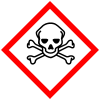 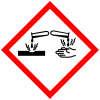 | Recovery of HF and NH4F | Buffered Oxide Etchant (BOE, BHF); aqueous solutions of HF; solutions of NH4F. |
| Aqueous solution containing HCl, HNO3, H2SO4 in variable proportions (acid concentration < 40%). | 06 01 06 | | Recovery of HCl, HNO3, H2SO4 | Aqueous solutions of HCl, HNO3, H2SO4. |
| Mixture of ethanol, propanol, methanol, acetone, MBK (methyl butyl ketone) and NMP (N-methyl-pyrrolidone, CAS# 872-50-4) in variable proportions with traces of dissolved PMMA and Novolak resins. | 07 01 04 |   | Recovery of NON-halogenated organic solvents | Ethanol; Propanol; Methanol; Acetone; Methyl butyl ketone (MBK); N-methyl-pyrrolidone (NMP); Shipley 1165 remover. |
| Mixture of trichloroethylene and chlorobenzene in variable proportions, with traces of dissolved PMMA resin. | 07 01 03 | 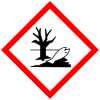 | Recovery of halogenated organic solvents | Trichloroethylene; Chlorobenzene. |
| Aqueous solution containing NaOH, KOH in variable proportions (base concentration < 50%) and traces of dissolved Novolak resin. | 06 02 05 | | Recovery of KOH and NaOH | Aqueous solutions of KOH, NaOH. |
| Aqueous solution of NH4OH (conc. < 20%) and TMAH (tetramethylammonium hydroxide, CAS# 75-59-2, conc. < 5%). | 06 02 03 | | Recovery of NH4OH and TMAH | Aqueous solutions of NH4OH; Tetramethylammonium hydroxide (TMAH); Shipley 300 series developers |
| Saline solution of KI (< 20%), I2 (< 10%), K3Fe(CN)6 (potassium ferricyanide < 10%), FeCl3 (< 30%), with traces of dissolved Fe, Cu, and Au. | 06 03 11 |  | Recovery of KI, I2, K3Fe(CN)6, FeCl3 | Aqueous solutions of KI, I2, K3Fe(CN)6, FeCl3. |
Procedures for Minor Environmental Emergencies
In the event of a chemical spill, immediately implement the following procedures:
Before intervening
- Open the motorized window using the window control to promote natural ventilation;
- Create a "safe zone" around the hazard: remove ignition sources, stop ongoing work, disconnect power from electrical equipment, and remove incompatible materials;
- Quickly retrieve the SDS from the SDS shelf for intervention instructions;
- Intervene only under safe conditions;
- Do not face the emergency alone.
- Wear specific PPE (gloves, splash goggles, protective clothing, and filter masks for vapors) as indicated by the SDS;
- Stop the liquid spill using suitable absorbent material.
Spill response procedures
A spill kit for accidental leaks is available in the cabinet located in the LITHO laboratory access room.
The following table lists the recommended methods and materials for cleaning up chemical spills.
| Spill Type | Recommended Cleanup Methods |
| Inorganic acids | Apply sodium bicarbonate/calcium oxide or sodium carbonate/calcium oxide. Absorb with granules or vermiculite. NOTE: Hydrofluoric acid is an exception (see below). |
| Hydrochloric acid | Do not use water. Absorb with sand or sodium bicarbonate. |
| Bases (caustic alkalis) | Neutralize with acid or other chemical neutralizers and absorb with granules or vermiculite. |
| Halogenated hydrocarbons | Absorb with granules or vermiculite. |
| Hydrofluoric acid (HF) | Absorb with calcium carbonate (or calcium oxide) rather than sodium bicarbonate, which can lead to the formation of sodium fluoride (considered more toxic than calcium fluoride). Be extremely careful when choosing absorbent granules; avoid those containing silicates, as they are incompatible with HF. |
| Inorganic salt solutions | Apply soda (sodium carbonate). |
| Oxidizing agents | Apply sodium bisulfite. |
| Peroxides (violent reactions with water) | Absorb with granules or vermiculite. |
| Reducing agents | Apply soda or sodium bicarbonate. |
Once the spill is contained
- Collect the contaminated absorbent material into specific containers for disposal as special waste;
- Clean the area and materials affected by the spill.
Specific Safety Rules for Equipment Usage
This section provides fundamental information for the safe operation of the instrumentation and equipment within the LITHO laboratory. Before using any equipment, it is mandatory to review the corresponding user manual, which can be found on the designated shelf in the laboratory access room.
Before operating the instruments, please consult also the specific safety guidelines and documentation for each:
- Fume Hood and Ventilation
- Ultrapure Water Dispensing System
- Glove Box
- Mask Aligner
- Spin Coater
- Hotplate
- Plasma Cleaner
- Reactive Ion Etching system
- Vacuum oven for HMDS process
- Optical Microscope
- Wafer Scriber
Safety Information for Chemical Fume Hood Usage
The chemical fume hood is considered a potential hazard zone, as flammable, explosive, or toxic atmospheres can potentially develop within it. For this reason, the hood must be maintained in perfect working order.

The chemical processes permitted within the LITHO laboratory are exclusively those strictly related to the lithographic process, specifically:
- Substrate cleaning with solvents and/or the RCA process;
- Photoresist or electron-beam resist development with the corresponding developer;
- Removal of photoresist or electron-beam resist with NMP or other solvents;
- Oxide removal using BOE (Buffered Oxide Etchant) solution;
- Film etching with diluted acidic or alkaline solutions;
- Deep etching of Silicon (Si) with KOH solution.
Chemical processes other than those listed above are strictly prohibited.
It is forbidden to dispose of any chemical substance, regardless of concentration, into the sink drain inside the hood or in the entrance corridor. Process waste must be stored, depending on its type, in the appropriate containers located inside the safety cabinets, and only for the time strictly necessary for disposal.
During any chemical process, it is mandatory to wear a mask or protective goggles, a lab coat, and gloves appropriate for the risk level. Once the process is complete, you must correctly dispose of the waste, thoroughly wash the glassware with the ultrapure water available in the hood, and place the clean glassware on the drying rack or in the cabinet in the entrance corridor.
How to Use the Chemical Fume Hood:
- All operations involving hazardous chemicals must be performed under a ventilated hood;
- Before starting work, ensure that the hood exhaust and laboratory ventilation are functioning;
- If there are doubts regarding performance or the frequency of safety inspections, contact the Prevention and Protection Service (SPP) through the Laboratory Manager (RDL). Do not use the hood until its correct operation is confirmed;
- Avoid creating air currents near an operating hood (e.g., opening doors or windows, frequent pedestrian traffic);
- The working area and all materials inside the hood must be at least 15-20 cm away from the front opening;
- Keep the work surface clean and tidy during and after each operation;
- Keep only the material strictly necessary for the activity under the hood: do not use the hood for storage;
- Do not obstruct the airflow along the work surface. If bulky equipment is necessary, lift it at least 5 cm off the surface and keep it away from the side walls;
- Do not obstruct the exhaust slots (baffles) at the back of the hood;
- All users must be aware of the emergency procedures to follow in case of explosion or fire inside the hood.
Exhaust Control
The hood exhaust is controlled via the electrical panel located in the laboratory room, to the left of the internal partition door. The panel contains two inverters; the hood exhaust is controlled by the right-side inverter.

- To start the exhaust, press the green power button.
- Verify that the inverter frequency is 50 ± 1 Hz, adjusting the speed control knob if necessary.
- Once the process is complete, turn off the exhaust by pressing the red stop button.
Ventilation Compensation
For the hood to function correctly, the laboratory's negative pressure caused by the exhaust must be compensated by an intake of external air via the Air Handling Unit (AHU) system. Therefore, you must turn on the laboratory ventilation every time the hood exhaust is activated. The laboratory ventilation is controlled by the electrical panel located on the right of the internal partition door.

- To turn on the ventilation: rotate the power knob to position "I" and verify that the speed control knob is set to 30%.
- To turn off: rotate the power knob to position "0".
Safety Information for the Ultrapure Water Dispensing System
The chemical fume hood is equipped with a system for the storage, purification, circulation, and dispensing of ultrapure water, stored in a 50-liter tank located inside the hood. A series of ion-exchange filters purifies and maintains the purity of the water, which is recirculated through the system via a pump. The amount of recirculated water and the dispensing pressure are controlled by a recirculation bypass valve. This valve must be adjusted so that the pressure on the leftmost gauge—with the pump on and no water being dispensed—is between 10 and 15 psi.

To monitor water quality, a resistivity meter continuously measures its resistivity. A reading below 18 M?·cm indicates a problem within the purification system. A button on the resistivity meter allows for calibration checks (when pressed, the instrument should display a reading of 10 M?·cm).
To maintain water purity, an automatic timer alternates purification cycles (approx. 20 minutes) with standby cycles (approx. 3 hours), even when the system is not in use. For this reason, it is critical that the water level in the tank is always kept above the minimum value.
System Operation
The ultrapure water system is operated via the electrical panel on the front of the chemical fume hood.

Three indicator lights show the tank water level:
- Green = OK
- Yellow = Warning level
- Red = Insufficient level
It is essential to refill the tank as soon as the yellow warning light illuminates. If the red light turns on, the recirculation is disabled and the dispensing system is locked.
- To turn on the system, press the green "WATER PUMP" button.
- Dispense water using the dispensing gun by pressing the lever.
- After use, check the tank level; if the yellow light is on, refill the tank.
- Press the "WATER PUMP" button again to turn off the system.
Refilling the Tank
When the yellow warning light illuminates, the tank must be refilled as soon as possible. This operation is performed at the rear of the chemical fume hood using the integrated air-powered filling pump.

- Place a container of bi-distilled water at the back of the hood.
- Remove the protective cap from the filling tube and insert the tube into the container.
- Open the compressed air valve to activate the filling pump.
- Note: The pumping frequency must not exceed 2 Hz.
- If the container empties and the pump begins to draw air, close the compressed air valve immediately to prevent pump damage.
- Continue refilling with additional containers until excess water is seen exiting the transparent overflow tube.
- Close the compressed air valve and replace the protective cap on the filling tube.
Bi-distilled water containers are stored in the warehouse adjacent to the Physics building electrical substation, room MO-17-00-XXX.
Safety Information for Glove Box Operation
The glove box is used for the storage and manipulation of solid samples sensitive to atmospheric contamination. The working atmosphere consists of nitrogen (N2), purified through a recirculation system with catalytic filters. It features two different-sized evacuable antechambers for introducing or extracting samples without contaminating the internal atmosphere and is equipped with trace sensors for oxygen (O2) and water (H2O) in parts per million (ppm).

System Operation and Dependencies
The system relies on:
- Compressed air for automatic valve actuation;
- Nitrogen for internal pressure equalization;
- Vacuum (generated by a scroll pump) for antechamber evacuation.
Operations are performed via the control panel, foot pedals, and manual valves.
Critical Requirement: To prevent sample contamination, a constant supply of nitrogen must be ensured. In the event of a power outage, the internal nitrogen circulation system must be restarted as soon as possible.
Oxygen and Water Sensors
To ensure the operational life of the trace sensors, do not operate them if pollutant concentrations exceed 200 ppm. If readings rise above 200 ppm, turn off the sensor immediately and investigate the cause. Common issues include:
- Saturated getter/catalyst;
- Glove box leak (e.g., punctured glove);
- Introduction of unsuitable materials (e.g., porous materials or unsealed containers);
- Incorrect antechamber operation.

Getter Regeneration Procedure
Regeneration is typically required once a year.
Prerequisite: Ensure the O2 reading is < 100 ppm. If it is higher, you must first purge the chamber with pure nitrogen:
- Maintain overpressure by holding the "high pressure" pedal.
- Open one of the KF40 flanges on the back and insert the N2 supply line.
- Flush with N2 until the reading drops below 100 ppm.
- Quickly close the flange while keeping the high-pressure pedal pressed to prevent air backflow.
Regeneration Steps:
- Connect a Forming Gas cylinder (95% N2 - 5% H2) to the flow regulator under the chamber. Ensure the cylinder has at least 30-40 bar (1500-2000 liters).
- Set the flow rate to 500 liters/hour.
- Deactivate "circulation" and maintain overpressure using the high-pressure pedal.
- Turn on the scroll pump and open the manual valve. Ensure the antechamber purging valves are closed.
- Activate the "regeneration" function. The 16-hour cycle proceeds as follows:
- First 5 hours: Catalyst heating at atmospheric pressure.
- At hour 3: Forming gas injection for catalyst reactivation (approx. 3 hours).
- Following 6-7 hours: Gas flow closes; catalyst is vacuum-pumped and cooled.
- Last 5 hours: Catalyst is returned to atmospheric pressure using the nitrogen line.
- Once the cycle is complete, reactivate the "circulation" function.
Operational Precautions
- Glove Safety: Avoid any operation that could puncture the gloves.
- Antechamber Use: Opening and closing the antechambers must be performed correctly.

For additional details, refer to the user manuals on the MSDS/Manuals shelf in the access room.
Safety Information for Mask Aligner Operation
The mask aligner utilizes compressed air for internal actuation, vacuum (generated by a diaphragm pump) for wafer clamping, and nitrogen for cooling and reducing ozone production by the UV lamp. Residual ozone is expelled through the laboratory’s exhaust system.

Before using the instrument, ensure that the vapor extraction system is functioning.
To turn on the mask aligner, it is critical to follow this specific sequence:
- Verify that the mask aligner electronics are switched off;
- Open the compressed air and nitrogen valves located behind the instrument;
- Turn on the vacuum pump labeled "mask aligner";
- Ignite/turn on the UV lamp;
- Turn on the mask aligner electronics;
- Use the "standard" exposure mode.
For any additional information, please refer to the user manuals available on the MSDS/Manuals shelf in the laboratory access room.
Safety Information for Spin Coater Operation
The spin coater utilizes vacuum for substrate clamping, compressed air to protect the motor from solvent vapors, and an exhaust system for the expulsion of those vapors.
Before using the instrument, ensure that the vapor extraction system is functioning.
Exclusive Process Policy: The spin coater is dedicated exclusively to lithographic processes. Its use is permitted strictly for the application of standard photoresists or electron-beam (e-beam) resists. No materials other than lithographic resists are allowed under any circumstances (e.g., non-lithographic polymers, organic/biological solutions, or general chemical coatings).
The resist solution must be dispensed with the lid closed using the dedicated dosing syringes. This procedure ensures that solvent vapors are effectively expelled through the exhaust system.

Best Practices and Maintenance:
- Dispense only the necessary amount of resist required for your substrate. Excessive dispense volumes create heavy accumulation at the bottom of the bowl, waste material, and risk clogging vacuum lines.
- After every single use, clean the chuck, centering tools/guides, and all accessories to ensure no resist residues remain.
- Always ensure the designated protective plastic liner is installed in the coating area.
- To prevent dangerous solvent vapor accumulation in the room, the cleaning of the plastic liner must be performed strictly inside the chemical fume hood (never clean it at the spin-coater station).
- Use low-grade acetone available in the solvents cabinet for cleaning. Do not use expensive electronic-grade solvents for cleaning operations.
- The plastic liner does not need to be replaced after every use; replace it only when it becomes excessively degraded or impossible to clean properly.
For any additional information, please refer to the user manuals available on the MSDS/Manuals shelf in the laboratory access room.
Safety Information for Hotplate Operation
The hotplate utilizes vacuum for substrate clamping, compressed air for substrate movement, nitrogen (N2) for cleaning, and an exhaust system for the removal of any vapors generated.
Before using the instrument, ensure that the vapor extraction system is functioning.

Operating Procedures and Restrictions
- Use of the hotplate is permitted exclusively for the thermal treatment of photoresist or electron-beam (e-beam) resist applied to wafers or wafer fragments.
- Thermal treatment must be performed with the lid closed. This ensures that any vapors generated from the substrate are effectively expelled through the exhaust system.
- Temperature settings and cycle duration are managed via the wall-mounted control panel. The thermal cycle is initiated by pressing the button located on the instrument.
Critical Maintenance and Precautions
- Resist Removal: It is mandatory to remove any resist residue from the bottom side of the wafer before starting the thermal process.
- Ceramic Insulators: Pay extreme attention to the small ceramic thermal insulators on the wafer lift pins. These components are very small and may stick to the back of the wafer if it is contaminated with photoresist. Take care not to lose them.
For any additional information, please refer to the user manuals available on the MSDS/Manuals shelf in the laboratory access room.
Safety Information for Plasma Surface Treatment System Operation
The low-pressure plasma surface treatment system utilizes nitrogen (N2) as the process gas and for venting (returning to atmospheric pressure). It relies on vacuum generated by a rotary pump located beneath the workbench. Vapors emitted by the pump are expelled through the laboratory's exhaust system. The process gas flow is regulated via a needle valve located on the front panel, adjacent to the sample loading flange.

Operating Procedure:
To perform a surface treatment, follow these steps in sequence:
- Open the nitrogen (N2) valve located on the wall behind the vacuum oven;
- Power on the instrument;
- Press "ventilation" and open the front door;
- Insert the samples and close the door;
- Press "pump" and wait a few minutes for the vacuum to stabilize;
- Press "gas" and adjust the needle valve until the flow meter indicates a value between 6 and 8;
- Set the power level ("power" knob) and the process duration ("timer" knob);
- Press "generator"; the plasma will ignite and remain active for the set duration;
- Once the treatment is complete, turn off "gas" and press "ventilation";
- After venting is finished, turn off "ventilation", open the door, and remove the samples;
- Close the door, run the "pump" for 10-20 seconds to clear the chamber, then power off the instrument;
- Close the nitrogen valve behind the vacuum oven.
For any additional information, please refer to the user manuals available on the MSDS/Manuals shelf in the laboratory access room.
Safety Information for Reactive Ion Etching (RIE) System Operation
Reactive Ion Etching (RIE) is a microfabrication process that uses RF plasma to selectively remove materials. A pattern, previously created via lithography and used as a mask, defines the areas to be etched. Plasma ions react with the exposed material in two ways: i) via physical sputtering; and ii) through chemical reactions with the exposed material, forming volatile compounds that are desorbed, thus achieving the etching of the pattern.
Compatible Materials:
Typical materials processed in this system include:
- Silicon (Si), Silicon Dioxide (SiO2), Glass;
- Silicon Nitride (S3N4);
- Optical or electron-beam (e-beam) resist;
- PDMS.
For materials other than those listed above, you must consult the Laboratory Manager (RDL).

System Overview:
The RIE system uses process gases (Ar, O2, CF4, CHF3) at low pressure (typically 10-300 mTorr) and nitrogen (N2) as a purge gas. After evacuating the process chamber and introducing the gas, the sample is placed on a cooled electrode holder covered in graphite to ensure chemical inertness (see rie-chamber-anchor). This holder acts as an electrode for an RF field (13.56 MHz) that generates the plasma. The applied RF power, typically between 20 and 300 Watts, determines the intensity of the etching process.
The entire process—including chamber closure, evacuation, gas introduction, etching, byproduct removal, and venting—is fully automated and managed by dedicated software.
General Instructions for Correct Use:
- Check the Status Light: The system is ready for use only when the green light is steady.
- Peripherals: Turn on the monitor and wireless keyboard before use and switch them off afterward.
- Control: Operate the system exclusively through the control software.
- Sample Condition: Ensure samples are dry and clean; contaminants can negatively affect the process or damage the system.
- Handling: To prevent damage to the graphite coating of the holder, use exclusively soft plastic tweezers for loading and unloading samples.
- Safety Zone: The chamber lid moves automatically during opening and closing: do not place any objects nearby to prevent damage to the equipment or the lid mechanism.

Typical RIE Process Sequence:
The following operations are executed via the control software:
- VENT: The process chamber is brought to atmospheric pressure.
- OPEN: The chamber lid opens, exposing the sample holder.
- Sample Loading: Place samples on the graphite-covered holder.
- CLOSE: The lid closes; ensure the area is free of obstacles.
- PUMPDOWN: The process chamber is evacuated (indicated by a flashing green light). A steady green light indicates that the required vacuum has been reached.
- START BATCH: Select a recipe and press START. An acoustic signal will sound when the cycle is complete.
- VENT: Bring the chamber back to atmospheric pressure.
- OPEN: Open the lid to retrieve samples.
- CLOSE: Close the lid.
- PUMPDOWN: Evacuate the chamber for standby.
Before operating the equipment, carefully read the user manual available on the MSDS/Manuals shelf in the access room.
Safety Information for Vacuum Oven Operation
The vacuum oven is used exclusively for applying HMDS (Hexamethyldisilazane) to lithography substrates.
Using the oven for any purpose other than HMDS application is strictly prohibited.
System Requirements and Preparation
The system utilizes:
- Compressed air for valve actuation;
- Nitrogen (N2) for purging and venting to atmospheric pressure;
- Vacuum generated by a scroll pump located beneath the workbench.
Before starting the process:
- Ensure the vapor exhaust system is functioning.
- Verify that the nitrogen pressure in the distribution system is > 0.5 bar.
- Open the nitrogen wall valve located behind the oven.
- Open the compressed air wall valve located above the hotplate.
Once the process is complete, remember to close both valves.

Controls and Monitoring
Vacuum oven operations are managed through:
- Top section: Manual valves and vacuum gauge.
- Bottom section: Pneumatic valves and temperature control.
- Above the oven: Working pressure is monitored via a capacitance manometer (Baratron).
The detailed schematic of the HMDS process is illustrated in the following flowchart.

For any additional information, please refer to the user manuals available on the MSDS/Manuals shelf in the laboratory access room.
Safety Information for Optical Microscope Operation
The optical microscope is used exclusively for inspecting the various stages of the lithographic process.

Best Practices:
- Switch off the illuminator immediately after use to preserve the light source.
- Cover the microscope with the provided dust cover when not in use to protect the lenses from dust and contamination.
WARNING
Allow the illuminator to cool down completely before applying the dust cover. The heat generated during operation is sufficient to melt the plastic cover—an incident that has occurred previously. To avoid damaging the equipment and the cover, ensure the lamp housing is cool to the touch before covering.
For any additional information, please refer to the user manuals available on the MSDS/Manuals shelf in the laboratory access room.
Safety Information for Wafer Scriber Operation
The wafer scriber is used exclusively for scribing and cleaving silicon (Si) wafers.

Operational Guidelines:
- Wafer Clamping: The system utilizes a vacuum for substrate fixation, generated by a diaphragm pump installed beneath the workbench.
- Scribing Load: To prevent damage to the diamond tip or the substrate, it is strictly recommended not to exceed a load of 15 g on the diamond scriber.
- Maintenance: Always switch off the illuminator immediately after use.
For any additional information, please refer to the user manuals available on the MSDS/Manuals shelf in the laboratory access room.